<?xml version="1.0" encoding="utf-8"?><feed xmlns="http://www.w3.org/2005/Atom" ><generator uri="https://jekyllrb.com/" version="3.10.0">Jekyll</generator><link href="https://chathurajayasankha.github.io/feed.xml" rel="self" type="application/atom+xml" /><link href="https://chathurajayasankha.github.io/" rel="alternate" type="text/html" /><updated>2026-08-16T11:16:19+10:00</updated><id>https://chathurajayasankha.github.io/feed.xml</id><title type="html">Chathura Jayasankha Gamage</title><subtitle>Graduate Researcher at University of Melbourne | AI for Healthcare</subtitle><author><name>Chathura Jayasankha Gamage</name><email>jayasankha1010@gmail.com</email></author><entry><title type="html">I owe a debt to humanity</title><link href="https://chathurajayasankha.github.io/posts/2026/08/debt-to-humanity/" rel="alternate" type="text/html" title="I owe a debt to humanity" /><published>2026-08-16T00:00:00+10:00</published><updated>2026-08-16T00:00:00+10:00</updated><id>https://chathurajayasankha.github.io/posts/2026/08/blog-post</id><content type="html" xml:base="https://chathurajayasankha.github.io/posts/2026/08/debt-to-humanity/"><![CDATA[<p>I owe a debt to humanity.</p>

<p>If I stripped away every piece of support I receive from the past and present of humanity, I would basically be a monkey jumping around in the trees. Maybe even less than that.</p>

<p>If I didn’t owe the past and present taxpayers of society, there would be no security and no modern infrastructure. If I didn’t owe knowledgeable and talented people, I would not have nice, convenient things like electricity, heat, and a safe house. If I didn’t owe farmers, I wouldn’t have easy access to a balanced diet. If I didn’t owe scientists, I would not have medicine. If I didn’t owe teachers, I wouldn’t know how to do anything other than what I experience by myself. If I didn’t owe past humans, I would have to do everything from scratch, learning by myself from just dirt and trees. And if I didn’t owe my parents, I wouldn’t have survived those fragile and weak early years.</p>

<p>So, if you think you don’t owe humanity, you are basically a bipedal monkey jumping around the jungle. I would really like people to understand this, to look at the people in the past and around them today and recognize that foundation. But what do we do with that realization? We can never truly pay back the ancestors, taxpayers, or scientists who came before us. Instead, we must pay it forward. We build on what we were given to support the continuous chain of human progress.</p>

<p>We should enjoy the luxuries created by humanity, but we must also take responsibility for its present and future.</p>

<p>I have seen so many people act entitled to every luxury without having a single thought of contributing in return. I don’t like the idea of people who think they built everything by themselves and owe nothing to anyone. That simply isn’t true, it would only be true if they were solitary hunter-gatherers, and maybe not even then.</p>

<p>Basically, it is unimaginable to live without owing anything to anyone. The attitude of consuming everything created by society while viewing yourself as entirely self-made ignores the vast network of human effort that makes our lives possible. True maturity isn’t just about independence; it is about recognizing our deep interdependence. When you realize how much you have been given, the only natural response is to find a way to give something back.</p>]]></content><author><name>Chathura Jayasankha Gamage</name><email>jayasankha1010@gmail.com</email></author><category term="My sudden thoughts" /><summary type="html"><![CDATA[I owe a debt to humanity.]]></summary></entry><entry><title type="html">Met Christopher Manning, Professor of Computer Science and Linguistics, Stanford University</title><link href="https://chathurajayasankha.github.io/posts/2013/08/blog-post-2/" rel="alternate" type="text/html" title="Met Christopher Manning, Professor of Computer Science and Linguistics, Stanford University" /><published>2025-05-07T00:00:00+10:00</published><updated>2025-05-07T00:00:00+10:00</updated><id>https://chathurajayasankha.github.io/posts/2013/08/blog-post</id><content type="html" xml:base="https://chathurajayasankha.github.io/posts/2013/08/blog-post-2/"><![CDATA[<h1 id="meaning-and-intelligence-in-language-models">Meaning and Intelligence in Language Models</h1>

<h2 id="about-christopher-manning">About Christopher Manning</h2>

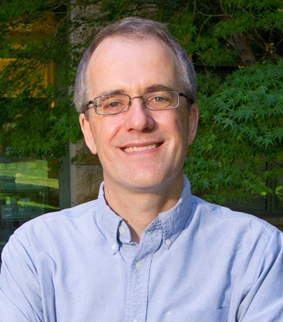
<p><img src="/images/manning.png" width="200" alt="Christopher Manning" /></p>

<p>Christopher Manning is the inaugural Thomas M. Siebel Professor in Machine Learning in the Departments of Computer Science and Linguistics at Stanford University, an Associate Director at the Stanford Institute for Human-Centered Artificial Intelligence (HAI), and an Investing Partner at AIX Ventures. His research is on computers that can intelligently process, understand, and generate human language. Chris is the most-cited researcher within Natural Language Processing (NLP), with best paper awards at the ACL, Coling, EMNLP, and CHI conferences and two ACL Test of Time awards; a member of the U.S. National Academy of Engineering; and recipient of the 2024 IEEE John von Neumann Medal for his pioneering work on applying neural network or deep learning approaches to human language understanding, which led into modern Large Language Models and Generative AI. He founded the Stanford NLP group, has written widely used NLP textbooks, and teaches the popular NLP class CS224N, which is also available online. At AIX Ventures, he is involved with finding, deciding, and mentoring AI-native startups. He is also Australian.</p>

<h2 id="copied-from-seminar-introduction">—Copied from seminar introduction—</h2>

<p>Language Models have been around for decades but have suddenly taken the world by storm. In a surprising third act for anyone doing NLP in the 70s, 80s, 90s, or 2000s, in much of the popular media, artificial intelligence is now synonymous with language models. In this talk, Christopher will take a look backward at where language models came from and why they were so slow to emerge, a look inward to give some thoughts on meaning, intelligence, and what language models understand and know, and a look at some recent work on steering language models to respond well to people’s questions and commands. In the first part, Christopher will argue that material beyond language is not necessary to having meaning and understanding, but it is very useful in most cases, and that adaptability and learning are vital to intelligence, and so the current strategy of building from huge curated data will not truly get us there, even though LLMs have so many good uses. In the second part, Christopher will introduce Direct Preference Optimization (DPO), a recent way of learning to steer LLMs from human preference data without the complex iterative training of traditional reinforcement learning methods. DPO leverages a mapping between reward functions and optimal policies to show that a suitable constrained reward maximization problem can be optimized exactly with a single training step. This method has opened up steering LLMs to a broad array of smaller players and is also usable for other goals such as improving the factuality of models.</p>

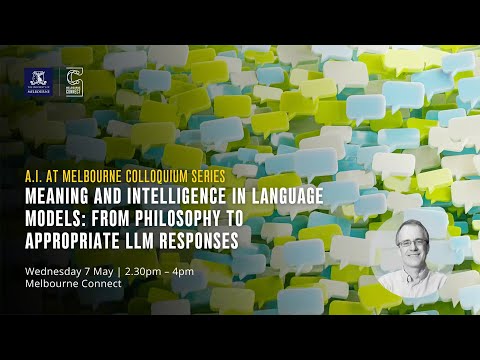
<p><a href="https://www.youtube.com/watch?v=XbfH2bfR5kc"><img src="https://img.youtube.com/vi/XbfH2bfR5kc/0.jpg" alt="Meaning and Intelligence in Language Models" /></a></p>

<p><em>Watch: Professor Manning explains the evolution of LLMs and DPO.</em></p>

<h2 id="my-key-takeaways-from-his-talk-philosphical">My Key Takeaways from his talk (Philosphical)</h2>

<ul>
  <li>Intelligence is the ability to learn and adapt to solve problems in uncertain, in ever-varying environments</li>
  <li>True intelligence requires adaptability, not just pre-programmed or repetitive execution</li>
  <li>Language is the “human trait par excellence” and a sufficient medium for achieving deep understanding.</li>
  <li>Current LLMs are largely “simulacra” that mimic human patterns rather than possessing deep reasoning.</li>
  <li>Current LLMs mimic human patterns rather than possessing deep reasoning.</li>
  <li>Adaptabality aspect is not so strong. Yet!</li>
  <li>Long way to go.</li>
</ul>

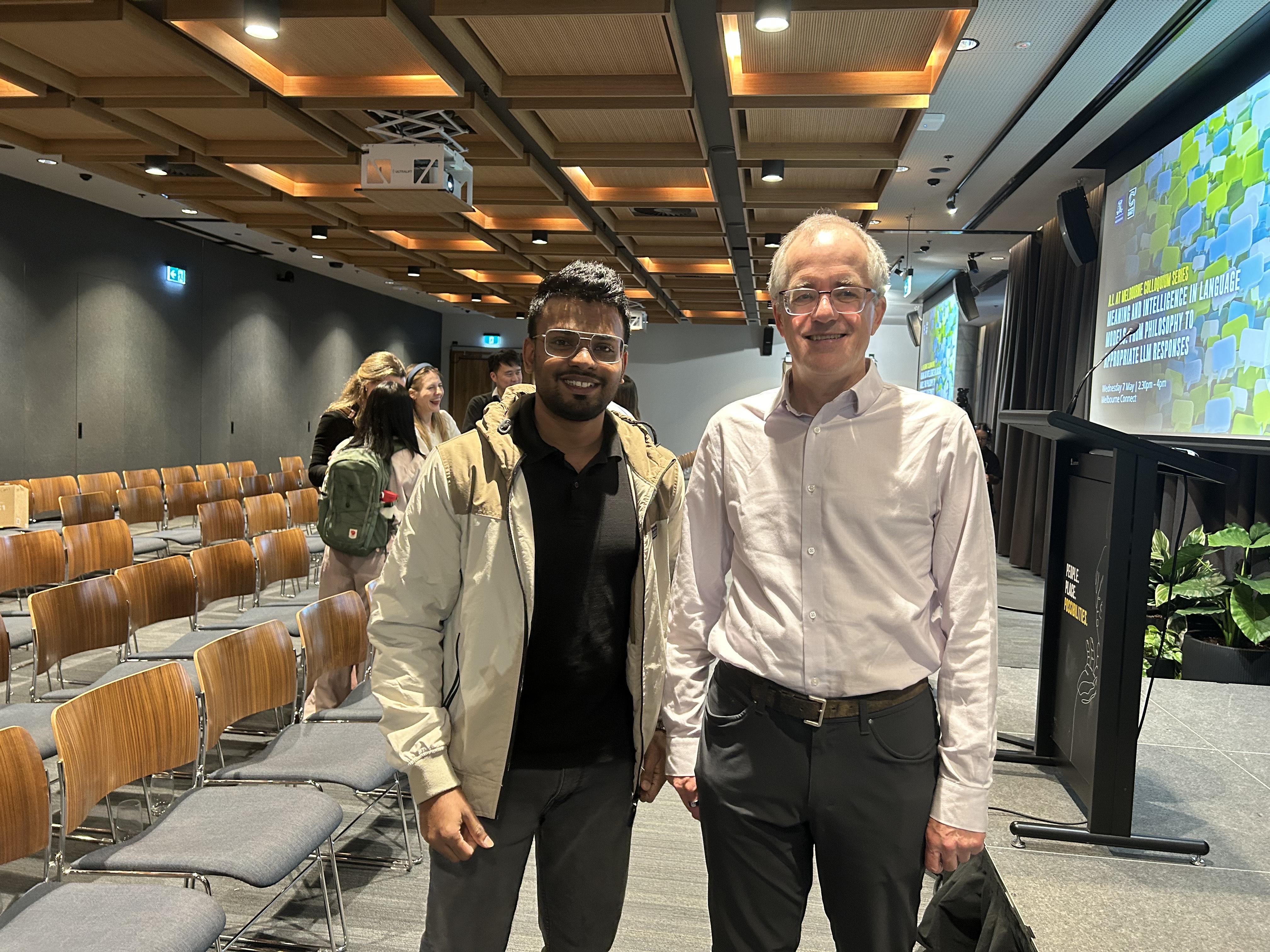
<p><img src="/images/Chathura_with_Christopher_Manning.jpeg" alt="Chathura met Professor Christopher Manning in Melbourne" />{ width=500px }
<em>I am honoured to meet and talk with Professor Christopher Manning</em></p>

<p><img src="/images/manning.png" width="200" alt="Christopher Manning" /></p>

<h2 id="his-famous-publications">His famous publications</h2>

<ul>
  <li>
    <p><strong>GloVe: Global Vectors for Word Representation</strong> (2014)<br />
  Introduced a new global log-bilinear regression model for the unsupervised learning of word representations, changing how machines understand word relationships.<br />
  <a href="https://nlp.stanford.edu/pubs/glove.pdf">📄 Read Paper</a></p>
  </li>
  <li>
    <p><strong>Universal Dependencies</strong> (2021)<br />
  Outlines the framework that has become the global standard for consistent grammatical annotation across more than 100 languages.<br />
  <a href="https://aclanthology.org/2021.cl-2.11/">📄 Read Paper</a></p>
  </li>
  <li>
    <p><strong>Direct Preference Optimization: Your Language Model is Secretly a Reward Model</strong> (2023)<br />
  Introduced DPO, a stable and efficient alternative to RLHF, now a primary method for aligning LLMs with human preferences.<br />
  <a href="https://arxiv.org/abs/2305.18290">📄 Read Paper</a></p>
  </li>
</ul>]]></content><author><name>Chathura Jayasankha Gamage</name><email>jayasankha1010@gmail.com</email></author><category term="Seminars" /><summary type="html"><![CDATA[When I met Professor Christopher Manning in Melbourne!]]></summary></entry><entry><title type="html">What are the things we can prove without accepting anything unconditionally?</title><link href="https://chathurajayasankha.github.io/posts/2025/12/blog-post-1/" rel="alternate" type="text/html" title="What are the things we can prove without accepting anything unconditionally?" /><published>2025-02-05T00:00:00+11:00</published><updated>2025-02-05T00:00:00+11:00</updated><id>https://chathurajayasankha.github.io/posts/2025/12/blog-post</id><content type="html" xml:base="https://chathurajayasankha.github.io/posts/2025/12/blog-post-1/"><![CDATA[<p>When we do science, maths or anything, we always assume something to be true without arguing back. Is this always true? Let us dive deeper and find out!</p>

<h1 id="the-nature-of-proof">The Nature of Proof</h1>
<p>A proof is a logical argument that shows a conclusion follows from a set of premises. But notice: even the process of reasoning itself depends on some unspoken rules. For example:</p>

<ol>
  <li>
    <p>Rules of Inference:
Rules like modus ponens (if “A” is true and “A implies B” is true, then “B” is true) are taken as given in any logical system. These rules are not proven within the system; they’re assumed to be valid.</p>
  </li>
  <li>
    <p>Logical Framework
Whether we’re working in classical logic, intuitionistic logic, or some other system, we start by assuming certain properties (like the law of non-contradiction or, in classical logic, the law of excluded middle). These aren’t proven—they’re the groundwork that makes proof possible.</p>
  </li>
</ol>

<h1 id="tautologies-the-exception">Tautologies: The Exception</h1>

<p>The only things that might be considered “provable without additional assumptions” are tautologies. Tautologies are statements that are true solely by virtue of their logical form. For example:
  “Either it is raining, or it is not raining.”
  This is true regardless of the weather because it follows the law of the excluded middle, a basic rule of classical logic.</p>

<p>But again, in quantum physics, there are instances we are not sure about the exact state of something. Cat is either alive, or dead or both until someone observes it.</p>

<p>Tautologies are not informative about the world; they simply reflect the structure of our logical system.</p>

<p>No Proof from Nothing
  =======</p>

<p>If you try to prove something without accepting any starting assumptions at all, then you have no foundation upon which to build a proof. In other words:</p>
<ul>
  <li>
    <p>Without axioms, there is no baseline
  Even if we think of some “self-evident” truths as not needing justification, choosing them is already an act of acceptance. You must decide what reasoning rules or definitions you trust, even if they seem so basic they go unnoticed.</p>
  </li>
  <li>
    <p>Circularity and the Need for Foundations
  Philosophers like Descartes attempted to find an andubitable foundation for knowledge (e.g., “I think, therefore I am”). Yet, even these foundational statements are accepted as starting points, not proven from nothing.</p>
  </li>
</ul>

<p>Summary and Implications
  ========</p>

<ul>
  <li>
    <p>Every proof has assumptions
  In any logical or mathematical system, proofs are built upon axioms or starting rules. You cannot escape this unless you restrict yourself to proving tautologies.</p>
  </li>
  <li>
    <p>The “Nothing” Case is Trivial
  If you disallow any unconditional assumptions, the only “proofs” you can muster are those that are true by definition, statements that don’t tell you anything new about the world.</p>
  </li>
  <li>
    <p>Reflection on Knowledge
  This insight is one reason why epistemolgists study the justification of our most basic beliefs and why mathematicians choose axiomatic systems (like ZFC in set theory). We must decide which assumptions are acceptable if we want to build any knowledge at all.</p>
  </li>
</ul>

<hr />

<p>In short, without accepting some underlying assumptions (even if they seem trivial or self-evident), we cannot prove anything of substance. The only “proofs” available in an assumption-free context are the tautologies that are built into the very language of logic. This is both a limitation and a foundational truth about reasoning itself.</p>]]></content><author><name>Chathura Jayasankha Gamage</name><email>jayasankha1010@gmail.com</email></author><category term="My curious thoughts" /><summary type="html"><![CDATA[When we do science, maths or anything, we always assume something to be true without arguing back. Is this always true? Let us dive deeper and find out!]]></summary></entry><entry><title type="html">Why do humans love music? It is just patterned vibrations on the eardrum!!!</title><link href="https://chathurajayasankha.github.io/posts/2012/08/blog-post-4/" rel="alternate" type="text/html" title="Why do humans love music? It is just patterned vibrations on the eardrum!!!" /><published>2025-01-03T00:00:00+11:00</published><updated>2025-01-03T00:00:00+11:00</updated><id>https://chathurajayasankha.github.io/posts/2012/08/blog-post</id><content type="html" xml:base="https://chathurajayasankha.github.io/posts/2012/08/blog-post-4/"><![CDATA[<p>Organisms love to recognize patterns. It is rewarding them. When you identify a pattern it is easy for you to predict the next step. It is a good thing to survival.</p>

<p>But when the pattern is very easy to understand the reward is low. When there is no pattern, then again the reward is none. But when the pattern is complex, but still recognizable as a pattern, it feels good.</p>

<p>When you listen to a new song with brand new melody, it doesn’t feel great. But the second time!!! It feels awesome. It is the best song ever for two more weeks. And you will listen to again and again until you get bored with it.</p>

<p>The reason is, the first time, you can not predict the next beat, next thing in the song. But the second time, you are bit familized with the song. Now it is hard to predict, but still you can manage to predict it a little bit. This generates a reward for the brain. Because of the you tend to listen to the song again and again.</p>

<p>But after sometime, you get bored. Because you now know the complete song, every next beat. There is nothing much predict and be happy once you predicted it right. Therefore no rewards.</p>

<p>It’s fascinating, isn’t it? On the surface, music is just vibrations travelling through the air, but its impact goes far deeper, weaving itself into our emotions, memories, and even biology. Here are some reasons why people love music:</p>

<p>I got help from GPT to summarize following details.</p>

<h3 id="1-biological-wiring">1. <strong>Biological Wiring</strong></h3>

<ul>
  <li><strong>Dopamine Release</strong>: Music triggers the brain’s reward system, releasing dopamine—the same “feel-good” chemical involved in activities like eating or falling in love.</li>
  <li><strong>Evolutionary Advantage</strong>: Music may have evolved as a social bonding tool, helping early humans communicate emotions or strengthen group cohesion.</li>
</ul>

<h3 id="2-emotional-resonance">2. <strong>Emotional Resonance</strong></h3>

<ul>
  <li>Music taps into emotions without the need for words. A sad melody can mirror heartbreak, while an upbeat rhythm can lift spirits. This emotional connection makes music universally relatable.</li>
</ul>

<h3 id="3-pattern-recognition">3. <strong>Pattern Recognition</strong></h3>

<ul>
  <li>The brain loves patterns and predictions. Music’s rhythm, harmony, and structure give the brain a playground of patterns to explore, predict, and enjoy when expectations are met—or pleasantly surprised.</li>
</ul>

<h3 id="4-cultural-and-social-connection">4. <strong>Cultural and Social Connection</strong></h3>

<ul>
  <li>Music often serves as a cultural marker, connecting people to their identity and heritage. On a personal level, sharing a song can create bonds between individuals or groups.</li>
</ul>

<h3 id="5-physical-response">5. <strong>Physical Response</strong></h3>

<ul>
  <li>Ever notice your foot tapping to a beat? Music engages the motor regions of the brain, making it almost impossible to stay still. Dancing or humming along is a natural response.</li>
</ul>

<h3 id="6-memory-and-nostalgia">6. <strong>Memory and Nostalgia</strong></h3>

<ul>
  <li>Music is a powerful trigger for memory. A single tune can bring back vivid moments from the past, adding a deep, personal layer of meaning.</li>
</ul>

<h3 id="7-escapism-and-catharsis">7. <strong>Escapism and Catharsis</strong></h3>

<ul>
  <li>For many, music offers an escape from daily life or a safe space to process complex emotions. It provides both solace and a sense of release.</li>
</ul>

<h3 id="8-universality">8. <strong>Universality</strong></h3>

<ul>
  <li>Regardless of language or culture, music speaks a universal language. A simple melody can evoke joy, sadness, or excitement in anyone, anywhere.</li>
</ul>

<p>So, while it’s “just patterned vibrations,” music’s magic lies in how our brains and hearts interpret those patterns. It’s science meeting art in the most human way possible. What kind of music do you personally connect with?</p>]]></content><author><name>Chathura Jayasankha Gamage</name><email>jayasankha1010@gmail.com</email></author><category term="My sudden thoughts" /><summary type="html"><![CDATA[Organisms love to recognize patterns. It is rewarding them. When you identify a pattern it is easy for you to predict the next step. It is a good thing to survival.]]></summary></entry></feed>